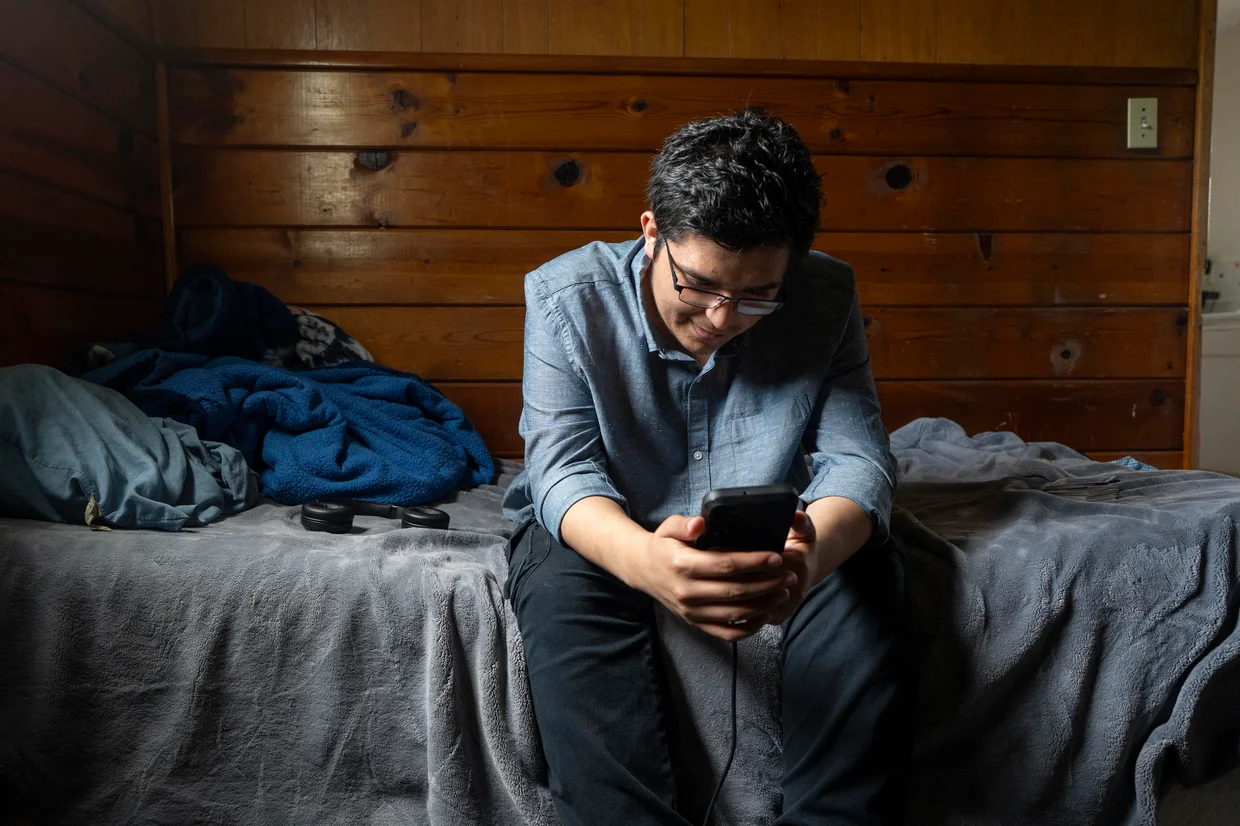
Damian Zermeño talks to his father over video chat. Saúl Zermeño, a single parent, was deported to Mexico in October after living 36 years in the United States.
Karla Gachet for KFF Health News
Damian Zermeño, 15, sensed something was wrong the moment he got home from school.
His aunt sat at the dining table, sobbing. His father, who’d walked him to the bus stop that morning and promised to take him to dinner when he got back, wasn’t there.
Saúl Zermeño, a 45-year-old single dad, had gone to a routine check-in appointment at an Immigration and Customs Enforcement office that morning, a requirement he’d complied with for years. The father had deferred action that allowed him to stay and work in the U.S., according to his attorney. But that day, Oct. 3, officers deported him to Mexico, where he hadn’t lived since he was 9 years old. Zermeño had been Damian’s sole caregiver since he was a baby because his mother chose not to be involved in the boy’s life, the family said.

Share This Post!
How Trauma Affects Kids in School
Source: Child Mind Institute For many kids who suffer from trauma, it’s not one event. Often, it’s ongoing abuse or neglect. This could be violence at home or in their neighborhood. [...]
Associations between Adverse Childhood Experiences and Measures of Poor Sleep Health in Adulthood
Source: ResearchGate Background: Sleep health is a multidimensional concept that plays a critical role in both physical and mental well-being. While there is evidence to suggest that sleep health may be linked [...]
Childhood trauma changes how the brain processes caregiver cues
Source: PsyPost For most young children, the sight and voice of a parent serve as a primary source of comfort and safety. A new study suggests that for children who have experienced interpersonal [...]
Child abuse and eating disorder symptoms: Shedding light on the contribution of identification with the aggressor
Source: ScienceDirect Childhood abuse has been increasingly recognized as a risk factor for eating disorder symptoms. Additionally, it has been demonstrated that childhood abuse may lead to identification with the aggressor, an automatic [...]
Can the positive buffer the negative? Testing the impact of protective childhood experiences on adjustment in adults following trauma exposure
Source: National Library of Medicine It is unclear if protective childhood experiences (PCEs), like emotional support and economic stability, exert influence on adulthood adjustment. Prior research suggests PCEs can promote childhood resilience through [...]
Complex Trauma Effects
Source: The National Child Traumatic Stress Network (NCTSN) Children whose families and homes do not provide consistent safety, comfort, and protection may develop ways of coping that allow them to survive and function [...]