

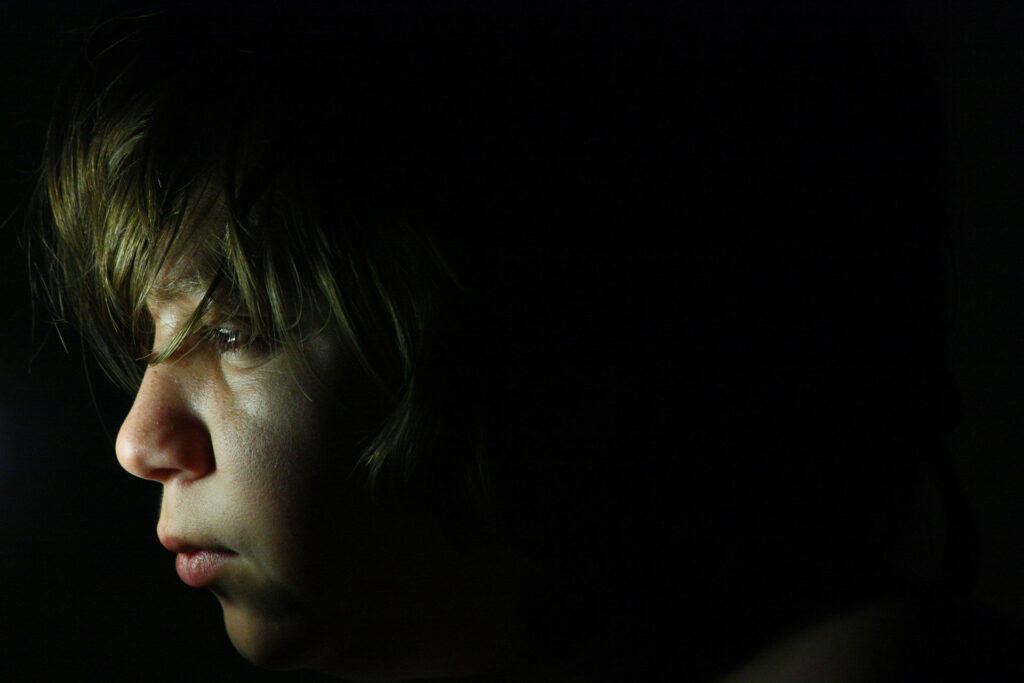
Children whose families and homes do not provide consistent safety, comfort, and protection may develop ways of coping that allow them to survive and function day to day. For instance, they may be overly sensitive to the moods of others, always watching to figure out what the adults around them are feeling and how they will behave. They may withhold their own emotions from others, never letting them see when they are afraid, sad, or angry. These kinds of learned adaptations make sense when physical and/or emotional threats are ever-present. As a child grows up and encounters situations and relationships that are safe, these adaptations are no longer helpful, and may in fact be counterproductive and interfere with the capacity to live, love, and be loved.
Complex trauma can affect children in a multitude of ways. Here are some common effects.
Share This Post!

Posttraumatic Stress Disorder: The Missed Diagnosis
National Institute of Health Posttraumatic stress disorder (PTSD) is frequently under-diagnosed in maltreated samples. Protective services information is critical for obtaining complete trauma histories and determining whether to survey PTSD symptoms [...]

Types of Therapy for Childhood Trauma Explained
Medically reviewed by Akilah Reynolds, PhD — Written by Mandy French on August 30, 2023 Childhood trauma can affect people in various ways. There are many therapy options to help treat the effects of this trauma. A [...]

The Intersection of Childhood Trauma and Addiction
By Shannon Karl Substance dependence leads to persistent negative consequences and the loss of human potential. These consequences often include chronic health problems, dysfunctional family environments, harmful economic impacts and premature [...]

Helping Children and Adolescents Cope With Traumatic Events
By National Institute of Mental Health Every year, children and adolescents experience disasters and other traumatic events. Family, friends, and trusted adults play an essential role in helping youth cope with [...]

The Link Between ADHD and Trauma
By Medical News Today Attention deficit hyperactivity disorder (ADHD) is a common neurodevelopmental disorder that often begins in childhood. Studies have found that trauma occurring in childhood may exacerbate or predict [...]

5 Reasons Why We Blame Ourselves After Trauma
By Kaytee Gillis, LCSW-BACS As a therapist who works with survivors of childhood trauma, I find that self-blame is a common part of their experience. As a survivor myself, I experience [...]