


By Starr Commonwealth
With grief, sadness is obvious. With trauma, the symptoms can go largely unrecognized because it shows up looking like other problems: frustration; acting out; difficulty concentrating, following directions, or working in a group. Often students are misdiagnosed with anxiety, behavior disorders, or attention disorders rather than understood to have trauma that’s driving those symptoms and reactions.
For children who have experienced trauma, learning can be a big struggle. But once trauma is identified as the root of the behavior, we can adapt our approach to help kids cope when they’re at school. Starr Commonwealth Chief Clinical Officer Dr. Caelan Soma offers these tips for understanding kids who have been through trauma plus strategies for helping them.
1. Kids who have experienced trauma aren’t trying to push your buttons.
If a child is having trouble with transitions or turning in a folder at the beginning of the day, remember that children may be distracted because of a situation at home that is causing them to worry. Instead of reprimanding children for being late or forgetting homework, be affirming and accommodating by establishing a visual cue or verbal reminder to help that child. “Switch your mind-set and remember the kid who has experienced trauma is not trying to push your buttons,” says Soma.
10 Things About Childhood Trauma Every Teacher Needs to Know
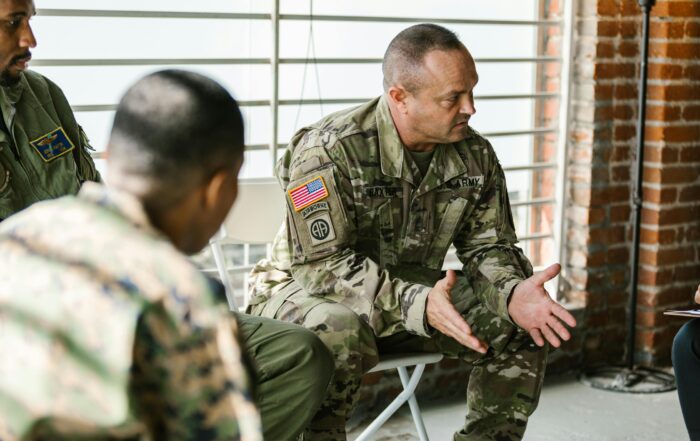
SAMHSA Recognizes Posttraumatic Stress Disorder Awareness Month
CSF written article Your Content Goes Here By Stacey Owens, M.S.W., LCSW-C, Military and Veterans Affairs Liaison, Center for Mental Health Services Although often associated with combat veterans, Posttraumatic Stress Disorder [...]

Post-traumatic Stress Disorder and Cancer
CSF written article Your Content Goes Here By American Society of Clinical Oncology (ASCO) Post-traumatic stress disorder (PTSD) is a type of anxiety disorder. Some people develop PTSD after [...]

Childhood Trauma Impacts Muscle Function in Later Life
CSF written article Your Content Goes Here By Morgan Sherburne – University of Michigan Adverse childhood experiences can detrimentally affect muscle function in older adults by impairing mitochondrial activity [...]

The True Link Between Early Trauma and Adult Mental Health
CSF written article Your Content Goes Here By David Rettew M.D., ABCs of Child Psychiatry The last decade of the 1990s was often labeled the “Decade of the Brain,” [...]

What’s the Best Treatment for PTSD in Children?
CSF written article Your Content Goes Here By Joan Kaufman, PhD Joan Kaufman, PhD, of the Department of Psychiatry at Yale University, discusses the different stages of trauma-focused cognitive [...]
Expert Consensus Regarding Indicators of a Traumatic Reaction in Autistic Youth: A Delphi Survey
CSF written article Your Content Goes Here By Connor M Kerns, Diana L Robins, Paul T Shattuck, Craig J Newschaffer, & Steven J Berkowitz It has been suggested that the sequelae of [...]